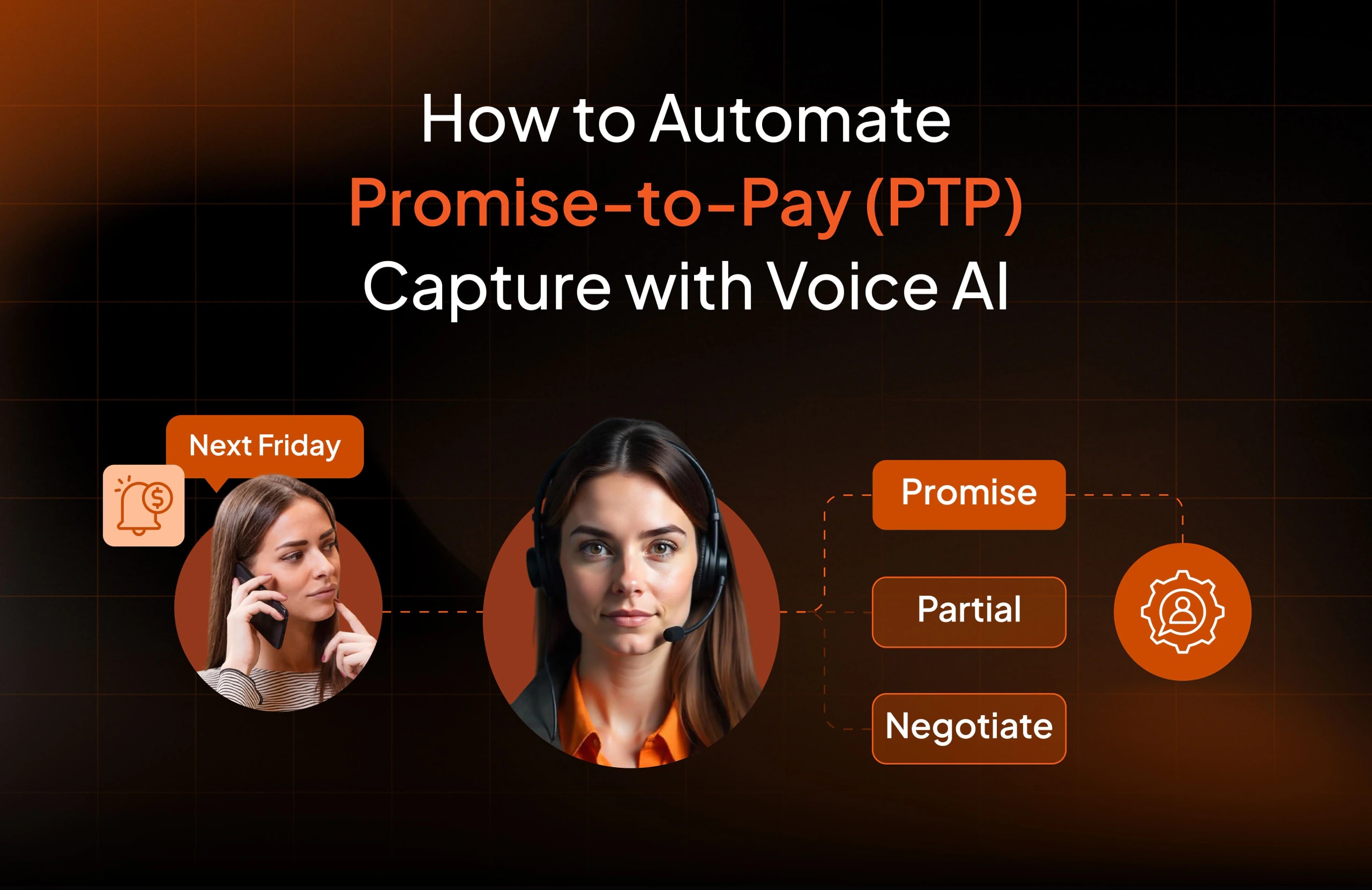
How to Automate Promise-to-Pay (PTP) Capture with Voice AI
Automate your PTP follow-up with Voice AI: capture commitments, reduce missed payments and streamline collections in one conversational call.
When it comes to customer experience, the aim is to be as frictionless as possible. This is especially true for debt collection firms, agencies, and institutions offering debt. Any customer drop-off, missed reminder, or delayed reminder can either be a loss of revenue, impact compliance, or worse, put the operations at risk.
The traditional methods of debt collection multiplied the above-mentioned challenges exponentially. The fragmented workflows were the root cause of these challenges. Borrowers received payment reminders via SMS or email asking them to log into a portal or call an agent to make a payment. This multi-step process created numerous friction points where interactions fell through the cracks. Every new reminder restarted the conversation, creating effort for both the borrower and the agent.
Hence, the biggest challenge for teams was converting reminders into payments. Making it the biggest gap where recoveries became difficult.
However, things changed with the advent of Voice AI. It brings in the ability to have two-way conversations. This enables your customers to have an uninterrupted conversation and inform you about their commitment to pay on the fly.
Here’s how the traditional workflow fares against the modern, AI-led workflow:
Step
Traditional Collection Workflow
Voice AI Payment Reminder Workflow
1
The borrower receives SMS/email reminder
The borrower receives a Voice AI call
2
Must log in to a portal or call back manually
The borrower speaks naturally (“I can pay now” / “Next Friday”)
3
Often gets distracted, misses it or drops off
AI captures intent instantly. If the borrower wants to pay now, they’re instantly sent a link to the payment portal or connected to a human agent for further assistance.
4
Multiple hand-offs: portal → IVR → agent
A single conversation completes payment or schedules a promise-to-pay (PTP).
5
CRM updates are manual
CRM updates sync automatically in real time.
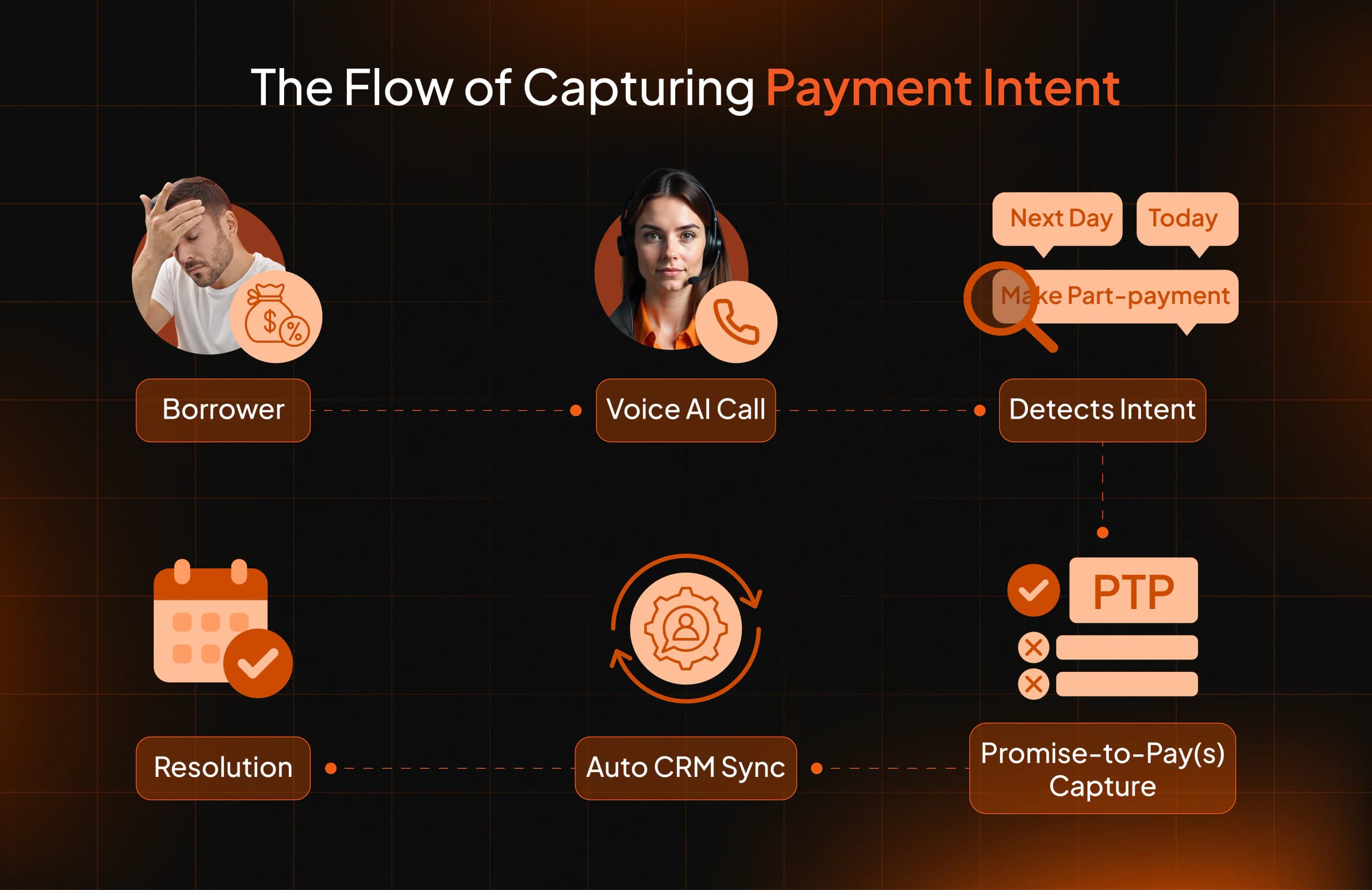
The benefit of the voice AI-led workflow is that you and the borrowers can be on the same page. Voice AI agents log the outcome of each conversation within the CRM or any other tool and capture the intent. Teams can then use this data to determine the potential communications sequences based on the borrower’s intents that range from PTPs to payment plan negotiation to part payment promises, due date extensions or more.
Making it a frictionless, memorable, and crucial touchpoint for your collections businesses.
How Voice AI Enables Payments and Promise-to-Pay in the Same Call
The system operates through a multi-step process that happens seamlessly within a single call. What feels like a natural conversation is actually a complex orchestration of speech recognition, decision logic, and CRM synchronization occurring in real time.
Step 1: Intelligent Intent Recognition
As soon as the borrower responds to the AI’s opening message, Natural Language Processing (NLP) analyzes their spoken reply to look for context and understand the meaning.
The AI can differentiate between:
1. A willingness to pay immediately
2. A request to pay later
3. A need to dispute the debt
4. A hardship explanation
5. A desire to speak to a human agent
This allows the system to respond with precision instead of generic scripted responses. Example:
“I can pay on Friday” is recognized not as “delay,” but as a promise-to-pay commitment with a specific date.
Step 2: Dynamic Routing Based on Borrower Response
Once intent is identified, the system applies conditional routing logic:
Borrower Response
System Action
“I can pay now.”
Either AI transfers user to a PCI-compliant payment IVR or sends a secure payment portal link via SMS/email or connects to an agent for assisted payment.
“I’ll pay next Friday.”
AI captures the Promise-to-Pay (PTP) date and amount, logs it in the CRM, and schedules automated follow-up.
“I need to talk to someone.” / hardship / dispute
Escalates to a live agent with full conversation context and borrower history.
Most common borrower responses fall within predictable patterns. Voice AI handles these consistently, so human agents focus only on complex, high-empathy cases. Saving the human counterparts time and helping them work on meaningful and challenging tasks.
Step 3: Nudge to a Secure Payment Portal
When a borrower chooses to pay immediately, the system nudges the borrower to a dedicated payment portal to close the transaction and make the payment.
Step 4: Real-Time CRM Synchronization
Every action taken during the call is automatically logged into the CRM or collections platform:
1. Payments update balances instantly
2. Promise-to-Pay commitments are timestamped
3. Disputes and escalations are documented
4. Call transcripts and compliance logs are stored
This happens instantaneously, allowing you to have accurate data, along with audit logs for compliance purposes.
Built-In Compliance and Auditability
Voice AI systems enforce compliance with built-in guardrails designed to keep your calls in line.
1. FDCPA disclosures are delivered consistently
2. TCPA consent is validated before calling
3. Time-zone dialing restrictions are automatically enforced
4. CFPB contact frequency rules (like the 7-in-7 rule) are system-controlled
5. Opt-outs are processed and logged instantly
Every call is recorded, transcribed, logged in, and traceable to the script that was used. Helping you be audit-ready for any regulatory review. This makes your regulatory reporting faster and dispute resolution more defensible.
The Business Impact: What Changes When Voice AI Handles the First Phase of Collections
Organizations that shift from manual dialling and portal-based payments to Voice AI payment reminder workflows consistently see measurable improvement across core collection KPIs.
1. Higher Right-Party Contact (RPC) Rates
Voice AI systems can optimize call timing, retry patterns, and outreach windows based on behavioral insights.
Metric
Traditional Dialing
Voice AI
Right-Party Contact
Standard
25–40% higher
Agent Fatigue Impact
High
None (AI runs 24/7)
Connect Rate in Real Deployments
Baseline
Up to 7× improvement
**
2. Faster Promise-to-Pay Capture and Payment Completion**
Because the system captures commitment during the call, there’s no need for the borrower to schedule a callback or navigate a portal. This reduces friction dramatically and converts more conversations into actual payments, reducing follow-up calls, and captures intent via PTPs.
AI-driven conversational collection has shown:
1. ~60% acceptance rate on payment plans offered in-call
2. Shorter average days-to-payment
3. Reduced roll rates and charge-offs
**
3. Reduced Manual Labor & Agent Workload**
Voice AI handles the high-volume, low-complexity tier of collections. Human agents focus only on hardship, disputes, and negotiation-heavy accounts.
Before Voice AI
After Voice AI
Agents spend time repeating reminder scripts
Agents engage only in escalation and resolution
Manual call logging + CRM updates
Fully automated documentation
High staffing cost to scale
1 AI agent = 3–10 human agent capacity
**
4. Increased Recovery Rates**
When a borrower can make a payment or commit to one in the moment they’re engaged, the reminder-to-payment gap disappears.
Case studies report:
- 3x higher debt recovery rates
- Significant reduction in delinquency roll-forward
- Greater capture of early-stage recovery (where willingness is highest)
5. Lower Operational Cost Per Contact
Manual outbound calling can cost $8–$15 per attempt and still result in voicemail. Voice AI reduces that cost dramatically by automating outreach at scale with consistent performance.
This helps agencies:
1. Reduce call center headcount requirements
2. Shorten training cycles
3. Stabilize cost structures
How Voice AI Can Fit Into Your Existing Systems
Voice AI platforms integrate with existing systems through standard APIs and webhooks.
Typical Data Flow:
1. The CRM triggers a call (payment due, PTP follow-up, delinquency ageing).
2. Voice AI places the call and conducts the conversation
3. Payment, PTP, dispute, or escalation outcomes are captured
4. The CRM updates automatically and in real time
Voice AI doesn’t replace collectors; it multiplies their impact by removing the repetitive, low-value, low-success calls that drain time and margins. It also brings in a sense of predictable performance along with the ability to scale it whenever required. This flexibility comes along with the ability to save time on training, reduce compliance risks, and ensure collections-related calls happen on time.
Frequently asked questions
Traditional dialers rely on agents manually marking PTP commitments, which can lead to inconsistency and missed entries. Voice AI, however, detects verbal cues such as “I’ll pay on Friday” or “next week” in real time, automatically logging the date, amount, and sentiment into the CRM, eliminating manual errors and ensuring higher intent accuracy.
Yes. Most Voice AI platforms integrate seamlessly using APIs or webhooks. They can exchange data with CRMs, payment portals, and collection management systems to update call outcomes, schedule follow-ups, or trigger workflows without human intervention.
Absolutely. Leading Voice AI systems are built with compliance at the core. They follow call time restrictions, maintain consent logs, handle opt-outs, and ensure all scripts and interactions adhere to FDCPA and TCPA guidelines.
In real deployments, collection firms have seen up to a 35–50% increase in PTP intent capture, 20–30% reduction in missed payments, and a 3–7x improvement in connect rates due to 24/7 availability and intelligent call routing.
Not at all. Voice AI automates repetitive reminder and follow-up tasks, allowing human agents to focus on complex or escalated cases. It’s an augmentation layer, not a replacement that helps teams handle higher volumes more efficiently.
Why RPC is stuck around 26%, what thousands of calls taught us, and how voice AI plus smart workflows can lift contact rates without burning out your collectors
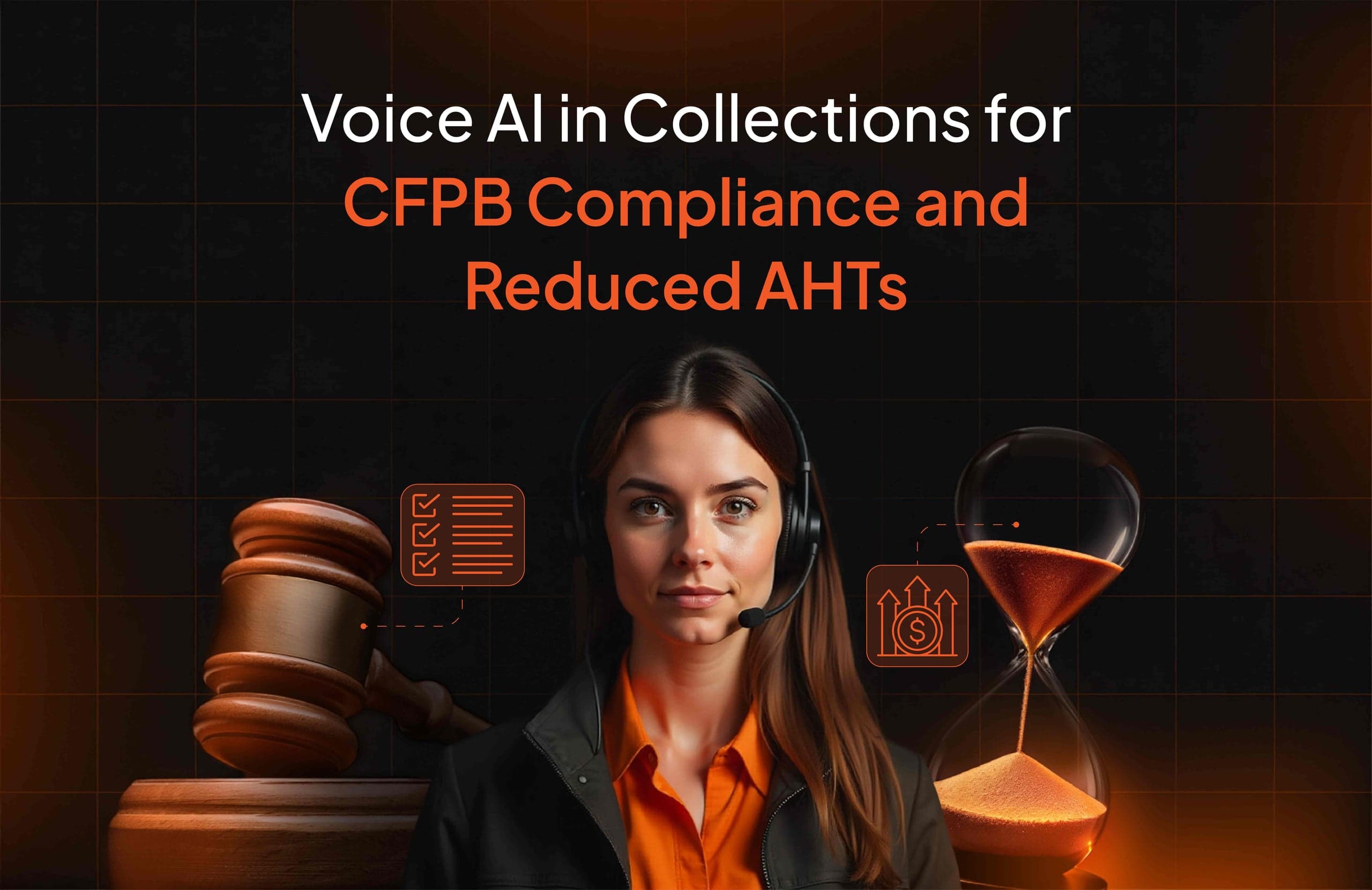
In debt collection, speed matters, but compliance matters more. Handle times cannot simply be shortened at the cost of following the law. Every second and every word must meet the strict standards set by the Consumer Financial Protection Bureau (CFPB).